Explanatory sessions of the European Commission on the negotiated chapters of EU law within the framework of the official screening
In December 2023, Ukraine received a decision from the European Union to start negotiations with Ukraine on joining the EU. It is currently difficult to determine whether the negotiation process has begun, as there are different opinions. For example, the European Commission says that the negotiations have not yet begun, while representatives of our government believe that the process has already begun, but the official start will be announced later. The so-called negotiation framework is now being approved by the member states. The EU has to approve its negotiating position for Ukraine’s accession to the European Union. The European Commission has already submitted a draft of such a negotiating framework to the European Council and it is now being discussed by member states. The draft submitted by the European Commission was not a surprise to anyone, as it is almost 99% similar to the negotiating frameworks adopted for Albania and North Macedonia. Once the draft negotiation framework is agreed upon and approved by all member states (this decision, like many others in the negotiation process, will require unanimous approval by all member states), the next step will be to hold the first intergovernmental conference between Ukraine and the EU. This government conference will be the official start of the negotiations on Ukraine’s accession to the EU. At this event, the EU Negotiating Council will be presented, and Ukraine will present its negotiating position (the parties will present their negotiating teams) and the official negotiations will begin. Once the draft negotiation framework is agreed upon and approved by all member states (this decision, like many others in the negotiation process, will require unanimous approval by all member states), the next step will be to hold the first intergovernmental conference between Ukraine and the EU. This government conference will be the official start of the negotiations on Ukraine’s accession to the EU. At this event, the EU Negotiating Council will be presented, and Ukraine will present its negotiating position (the parties will present their negotiating teams) and the official negotiations will begin.
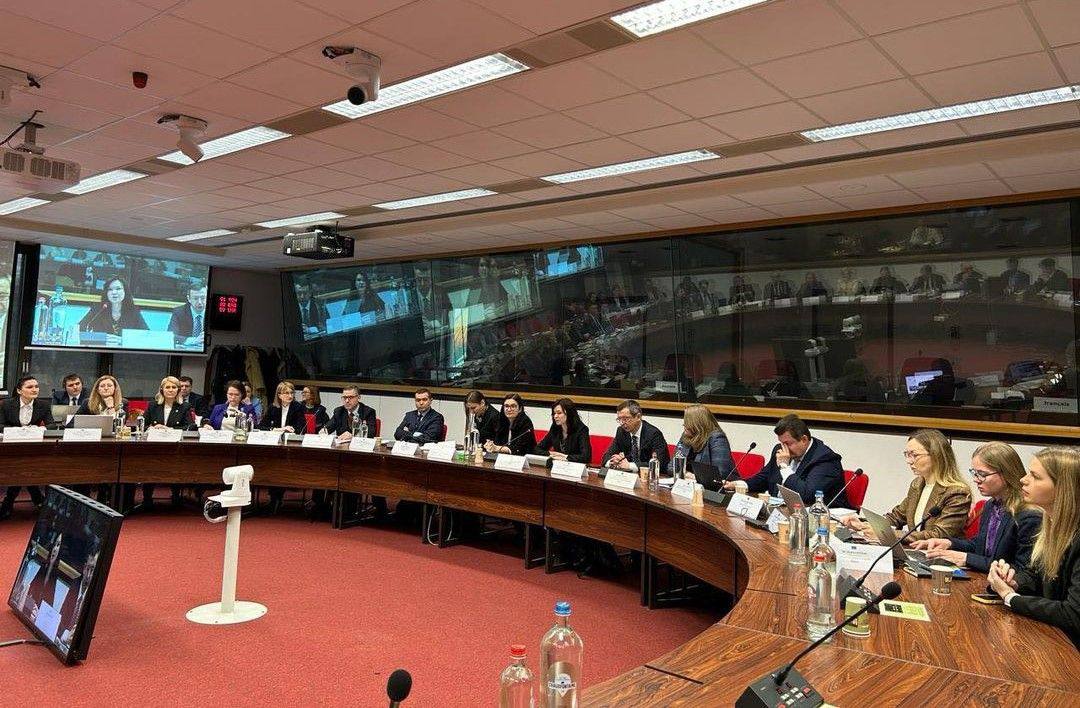
However, representatives of our government believe that the negotiation process has already begun, as one of the first stages of these negotiations is the official screening of Ukrainian legislation for compliance with EU law. Explanatory sessions are already taking place where the European Commission presents EU legislation in each area. Thus, on May 21 and 22, the European Commission held explanatory sessions on the negotiated sections of EU law as part of the official screening. This session concerned Title 27 «Environment and Climate Change». Subject matter experts, representatives of think tanks and organizations, and the public were invited to this event. Among the participants were also representatives of the Center for Sustainable Development and Environmental Protection, in particular, Yevhenia Kopytsia, Yevhen Suetnov, Olena Lozo, Olena Malokhlib and Oleksii Onishchenko.
Among the issues discussed were
– climate policy (on mechanisms for avoiding and reducing greenhouse gas emissions during the reconstruction of buildings; issuing licenses for the import and export of ozone and the introduction of a single customs window with the EU, launching a national emissions trading system and cooperation with EU programs such as Horizon Europe and Horizon 2020, calculating the “minimum” price of allowances at auctions for stationary installations in the EU, implementing Climate Neutrality Plans in Ukraine, etc.);
– environmental crimes (discussed the experience of EU countries in implementing Directive 2008/99/EC, mechanisms for involving the Ukrainian side in the process of revising this document. After all, Ukraine, together with EU countries, has developed certain recommendations within the SWIPE project);
– Waste management (discussing the EU experience in encouraging compliance with the waste management hierarchy by all participants, creating a system of extended producer responsibility, regulating the sphere of waste management in the extractive industry, etc;)
– chemical safety management (practical implementation of the provisions of the EU CLP technical regulation, the possibility of using IUCLID 6 software in Ukraine or creating a similar Ukrainian one, and ensuring cybersecurity through the exchange of experience with the EU);
– environmental control and responsibility (they talked about typical mistakes of the EU countries during the practical implementation of Directive 2004/35/EC, which should be of particular importance for Ukraine, the most effective ways for our country to update the material and technical base of environmental control, etc;)
– building a European model of waste management, implementation of the Single-Use Plastic Directive, the experience of the member states in implementing the “Towards a Circular Economy, Zero Waste Program for Europe” program, as well as control over cross-border waste movement and Ukraine’s participation as an observer in the process of finalizing the relevant EU regulation. Among the topics discussed were the most effective methods of landfill reclamation, asbestos-containing waste management in the EU, recycling of waste electrical and electronic equipment, etc;
– monitoring of atmospheric air;
– protection of biodiversity;
– revision of Directive 2010/75/EU on industrial emissions – when will these changes come into force, what is the deadline for their implementation for member states and candidate countries;
– regulation of the chemical safety system in the EU, REACH procedures, experience of withdrawal of highly hazardous chemicals from the market and their replacement with available alternatives;
– implementation of the EU Maritime Strategy Framework Directive, EU plans to revise the Water Framework Directive, further implementation of the Nitrate Directive in Ukraine, etc;
– soil monitoring;
– development and implementation of Nature Restoration Plans and the possibility of their special financing through LIFE or other European programs;
– measures to be taken to transition our forestry industry to Natura 2000 standards;
– continuation of technical and expert support for our country on the path of integration into the European family, etc.
It should be noted that representatives of the Ukrainian delegation often raised the question of the possibility of financing various areas, as well as the need to provide logistical support, but according to representatives of the European Commission, not all areas are eligible for assistance. But in our opinion, the first priority is to create a strong economy on the way to European integration, rather than rely on assistance from other countries (even given the difficult situation in the country due to the armed conflict). It is important that Ukraine, as a European country, shares a common history and common values with the member states of the European Union (EU) and is committed to upholding these values (as enshrined in the EU-Ukraine Association Agreement). For EU member states, it is very important to fulfill and respect the values enshrined in European legislation. That is, for Ukraine’s European integration, it is necessary to support the values of the EU (the situation regarding the military operations on the territory of Ukraine is an internal issue for the member states, and this position could even be traced in the responses of the European Commission). In other words, if we share the values of the EU, we can go along with them, even if we need more time and money to achieve these values, but this is our way to be together with the EU. If we want to be part of the EU, we need to support the EU values.
As for the specifics of negotiating Chapter 27 «Environment and Climate Change», the following should be emphasized:
1) This chapter contains an extremely large number of acts that need to be implemented into our legislation (currently there are about 200 of them);
2) This section deals not only with the automatic transposition of acts, i.e. the transfer of provisions of directives into Ukrainian legislation (this is relatively not the most difficult part of the work). The difficulty for Ukraine will be to ensure that the standards currently in force in the EU are met. For example, the implementation of the water directives means that Ukrainians’ taps must contain water that can be drunk directly from the tap.
3) Environmental legislation is often viewed as a constraint on business. It is in this area that candidate countries often emphasize the need for derogations or transitional periods, which, in fact, causes delays in the process of European integration. However, in our opinion, businesses should already be focused on environmental modernization and work in accordance with EU standards in order to be able to enter the European market in the future.
4) Environmental issues are indeed cross-cutting and will affect many other business-related chapters in addition to Chapter 27. On May 21, representatives of the European Commission emphasized the importance and simultaneous complexity of Title 27 «Environment and Climate Change» at the beginning of their speech.
Currently, our government is continuing the process of screening Ukrainian legislation for its compliance with EU law. The explanatory sessions will be followed by an extremely important stage of bilateral negotiations, during which Ukraine will have to present to the European Union its state of compliance in all areas and receive additional questions from the European Commission. It is on the basis of these bilateral meetings that a report will be prepared that will determine what steps Ukraine should take in the negotiation process. This report will define the main things that Ukraine will have to do as part of the accession negotiations. Currently, the government is forming a new negotiation architecture, and a presidential decree is expected to be adopted in the near future, which will approve the official delegation of Ukraine to participate in the negotiations. The relevant directives for participation in such negotiations will also be approved, and an interagency working group to organize the negotiation process will be set up at the level of the Cabinet of Ministers of Ukraine. In their communications to the media, the government representatives note that it is planned to involve business representatives and experts in the negotiating team.