by Ievgeniia Kopytsia
MSCA4Ukraine Research Fellow, University of Genoa
Associate Professor, Yaroslav Mudryi National Law University
Head, Centre for Sustainable Development and Environmental Law
Participating in the IFZO Annual Conference 2025 provided an important opportunity for me to reflect on resilience as a legal and governance concept, particularly at the intersection of climate change, environmental protection, and security. While the conference brought together scholars from a wide range of disciplines, many of the discussions resonated strongly with my own research on resilient climate and environmental law frameworks, developed within the MSCA4Ukraine project RESClimLaw.
Resilience, Infrastructure, and Legal Continuity
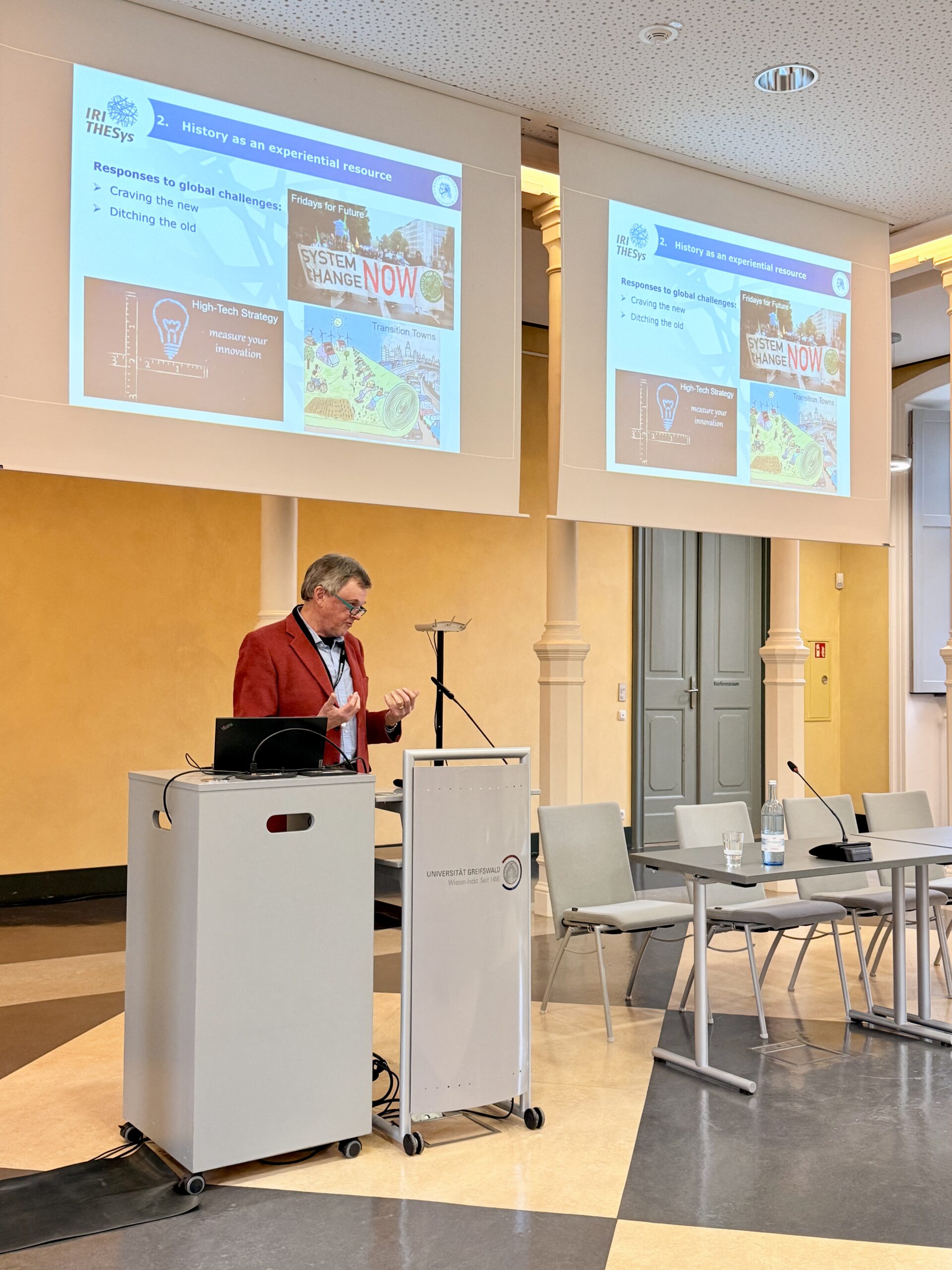
The keynote lecture by Timothy Moss on “Infrastructuring Resilience” was particularly influential for my legal perspective. By examining energy and water infrastructures through their historical trajectories, the keynote highlighted how resilience depends not only on technical adaptation but also on regulatory continuity, institutional memory, and long-term governance capacity. For climate and environmental law, this reinforced my view that legal frameworks must be capable of operating across emergency, transition, and recovery phases, especially in societies facing recurrent shocks.
Regional Governance, Legitimacy, and the Rule of Law
Discussions within the panel on Resilient Regions and Landscapes raised issues that are central to my work on legal resilience, notably legitimacy, participation, and the governance of socio-environmental transformation. Contributions on innovation politics, post-industrial landscapes, and housing markets illustrated how resilience is shaped through legal and institutional arrangements that allocate risks, structure decision-making, and mediate conflicts. These debates echoed core challenges in environmental and climate law, particularly the need to reconcile green transformation with social justice and democratic accountability.
Civil Defence, Social Resilience, and Legal Preparedness
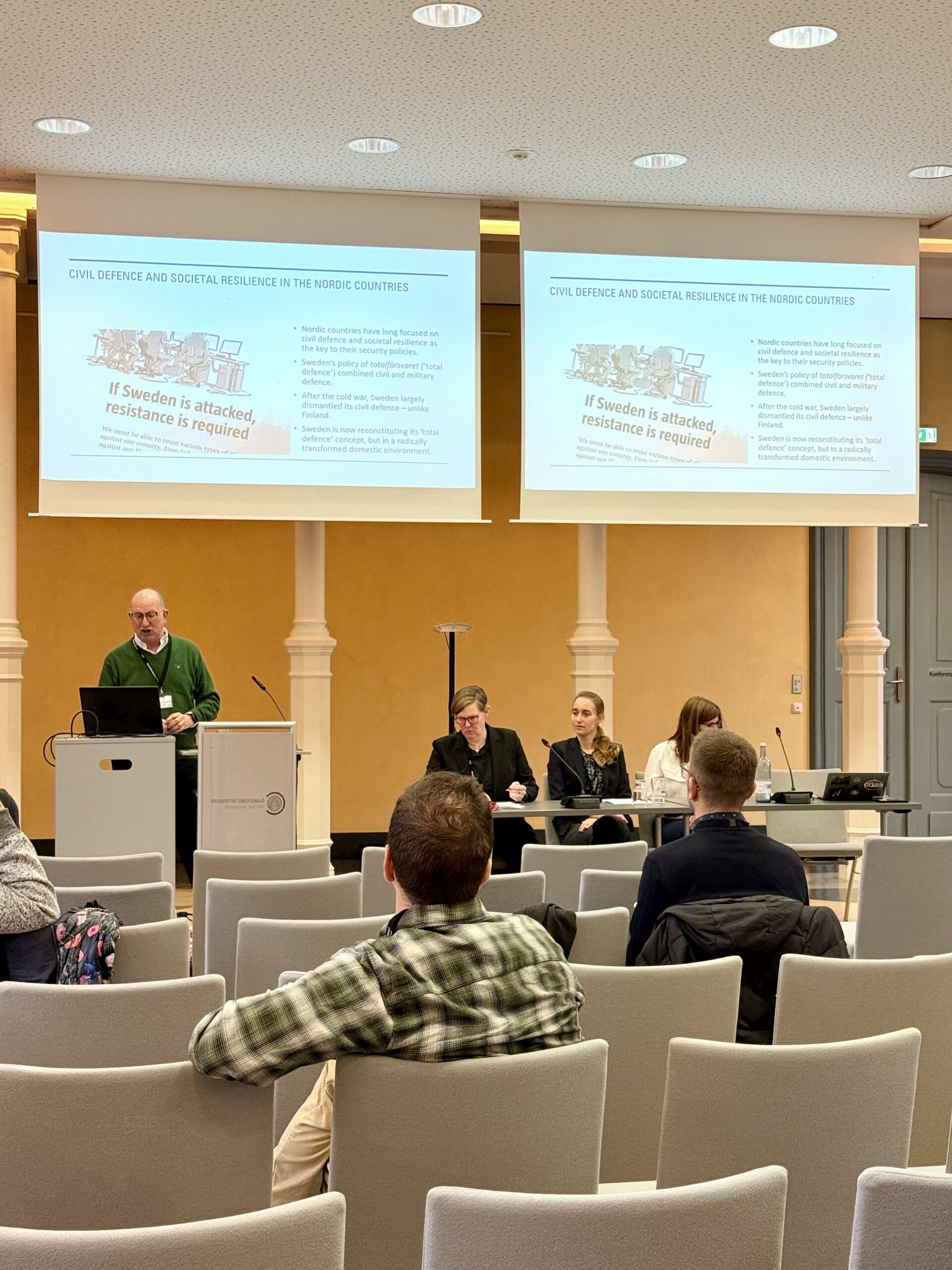
The panels on Civil Defence and Social Resilience and Resilience and Security offered valuable insights into how law underpins whole-of-society approaches to resilience. Reflections on Nordic civil defence models, youth policy, and societal preparedness demonstrated that resilience relies on legal frameworks governing emergency powers, responsibility-sharing, and public trust. For me, these discussions underscored the importance of designing legal systems that can respond to crises without eroding the rule of law or fundamental rights—an issue that is particularly acute in wartime contexts.
Reflections from My Research on Climate and Environmental Law
From the perspective of my ongoing research under the MSCA4Ukraine RESClimLaw project, the conference discussions are closely aligned with my analysis of how climate and environmental law must evolve under conditions of armed conflict and systemic risk. The recurring theme of resilience as an integrated governance challenge reinforced my argument that climate law cannot be separated from security considerations, yet must remain anchored in legality, transparency, and EU alignment.
The Baltic Sea Region discussions provided useful comparative insights into how different legal and governance systems conceptualise resilience through multi-level coordination and whole-of-society approaches. These reflections informed my ongoing work on embedding legal resilience into Ukraine’s post-war recovery, where climate adaptation, environmental protection, and reconstruction must proceed simultaneously under conditions of uncertainty.
Security Narratives, Climate Risk, and Legal Integration
Several contributions addressed the impact of Russia’s war against Ukraine on regional security narratives, prompting reflection on how security framing reshapes legal priorities. For climate and environmental law, this raises difficult questions about balancing regulatory flexibility with legal certainty and safeguarding environmental standards during crises. These issues lie at the heart of my research on ensuring that Ukraine’s recovery remains climate-resilient, rights-based, and compatible with EU law.
Concluding Reflections
Overall, the IFZO Annual Conference reinforced my conviction that resilience is not merely a policy slogan but a normative and legal project. Legal systems themselves must become instruments of resilience, capable of adapting to crisis while preserving democratic governance and environmental integrity. The interdisciplinary dialogue at IFZO provided a valuable space to situate my research within broader European debates and to further develop a legal understanding of resilience that is responsive to the realities of climate change, conflict, and recovery.