By Dr. Ievgeniia Kopytsia
MSCA4Ukraine Fellow, University of Genoa
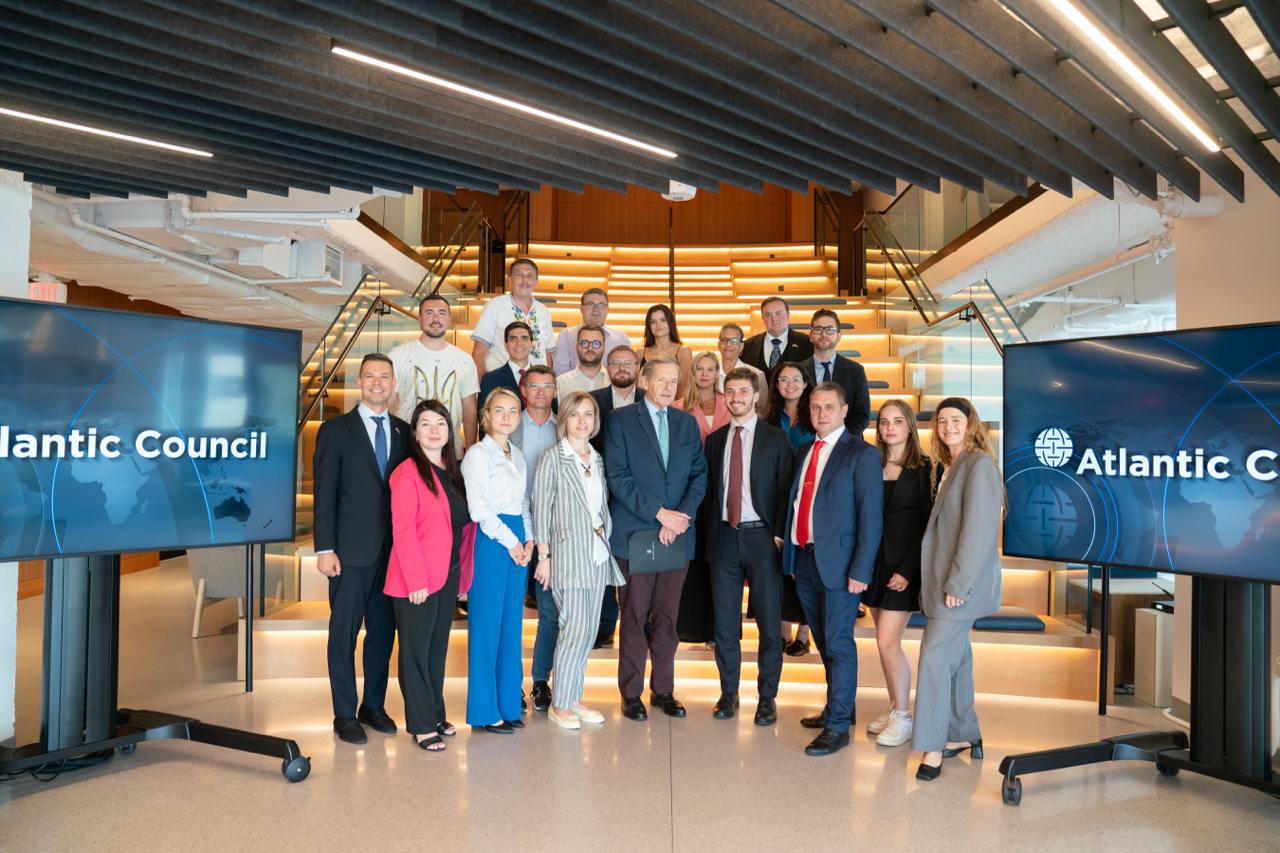
On August 13, 2025, during my engagement with the Atlantic Council in Washington DC, I had the opportunity to present key findings from the ResClimLaw project to policy experts and stakeholders focused on Ukraine’s reconstruction and transatlantic cooperation. This high-level discussion highlighted the critical intersection between climate security, strategic materials, and post-war reconstruction, themes that lie at the heart of building resilient legal frameworks for Ukraine’s future.
Climate Security as a Foundation for Reconstruction
The conversation at the Atlantic Council underscored a fundamental truth: climate security is not merely an environmental concern but a strategic imperative for Ukraine’s long-term stability and European integration. As Ukraine faces the dual challenge of rebuilding from war while adapting to climate change, the legal frameworks governing this reconstruction must be both forward-looking and deeply rooted in climate resilience.
The ResClimLaw project’s research demonstrates that environmental governance and climate adaptation cannot be afterthoughts in post-war planning. Instead, they must be integrated into the foundational legal structures that will govern Ukraine’s recovery. This means embedding climate considerations into constitutional reforms, regulatory frameworks, and institutional design from the outset.
Critical Materials and Green Transition Dependencies
One of the most compelling aspects of our Atlantic Council discussion centered on the intersection between Ukraine’s reconstruction needs and global supply chains for critical materials essential to green transition. Ukraine’s significant mineral resources—including lithium, graphite, and rare earth elements—position the country as a potential key player in Europe’s clean energy transition. However, this opportunity comes with complex legal and governance challenges.
The war has exposed vulnerabilities in global supply chains for critical materials needed for renewable energy infrastructure, battery production, and green technologies. As Europe seeks to reduce its dependence on authoritarian regimes for these materials, Ukraine’s post-war reconstruction presents an opportunity to build secure, sustainable supply chains aligned with democratic values and environmental standards.
From a legal perspective, this requires developing robust frameworks for:
- Sustainable extraction and processing standards
- Environmental impact assessment and mitigation
- Community consultation and benefit-sharing mechanisms
- Integration with EU regulatory frameworks and green taxonomy requirements
Legal Innovation for Climate-Resilient Reconstruction
The ResClimLaw project’s findings highlight the need for legal innovation that goes beyond traditional post-conflict reconstruction models. Climate-resilient legal frameworks must address three critical dimensions of institutional and regulatory transformation.
First, constitutional integration requires embedding environmental rights and climate obligations into Ukraine’s constitutional order, ensuring that climate considerations are not subordinated to short-term economic pressures. This foundational approach recognizes that sustainable reconstruction depends on constitutional protections that guarantee future generations’ rights to a stable climate and healthy environment, while establishing legal mechanisms to enforce these obligations even during periods of economic stress or political transition.
Second, regulatory coherence demands developing integrated regulatory frameworks that align climate goals with reconstruction priorities, avoiding the fragmentation that has characterized environmental law in many post-conflict contexts. This means creating unified legal structures that coordinate environmental protection, energy transition, urban planning, and economic development under a coherent climate-resilient framework, rather than treating these as separate policy domains that often work at cross-purposes.
Third, institutional design involves creating governance institutions capable of managing the complex trade-offs between immediate reconstruction needs and long-term climate resilience. This requires establishing new forms of institutional capacity that can balance urgent humanitarian and infrastructure needs with longer-term environmental sustainability, while maintaining democratic accountability and transparency in decision-making processes that will shape Ukraine’s future for decades to come.
Transatlantic Cooperation and Knowledge Transfer
The Atlantic Council engagement emphasized the importance of transatlantic cooperation in supporting Ukraine’s climate-resilient reconstruction. The United States and European Union share common interests in supporting Ukraine’s development of sustainable, democratic governance structures that can serve as a model for other post-conflict societies.
This cooperation extends beyond financial support to include knowledge transfer, technical assistance, and capacity building in climate law and environmental governance. The ResClimLaw project contributes to this effort by developing practical, evidence-based recommendations that can inform both policy and practice.
From Research to Implementation
As the ResClimLaw project continues to develop, the insights from the Atlantic Council discussion reinforce the importance of bridging academic research with policy implementation. The challenges facing Ukraine are not merely theoretical, they require practical, actionable solutions that can be implemented in complex political and economic contexts.
The intersection of climate security, critical materials, and post-war reconstruction represents a new frontier in international law and governance. Ukraine’s experience will likely provide lessons that extend far beyond its borders, informing approaches to climate-resilient development in other regions facing similar challenges.
Our engagement with the Atlantic Council demonstrates the growing recognition that environmental law and climate governance are not peripheral to security and reconstruction debates, they are central to building sustainable, resilient societies in an era of climate crisis.