(Re)Storing Nature, (Re)Building Peace: Environmental Recovery and Climate-Resilient Development of Ukraine
By Dr. Ievgeniia Kopytsia, MSCA4Ukraine Researcher, University of Genoa
Exploring Ukraine’s Path to Environmental Recovery and Climate Resilience
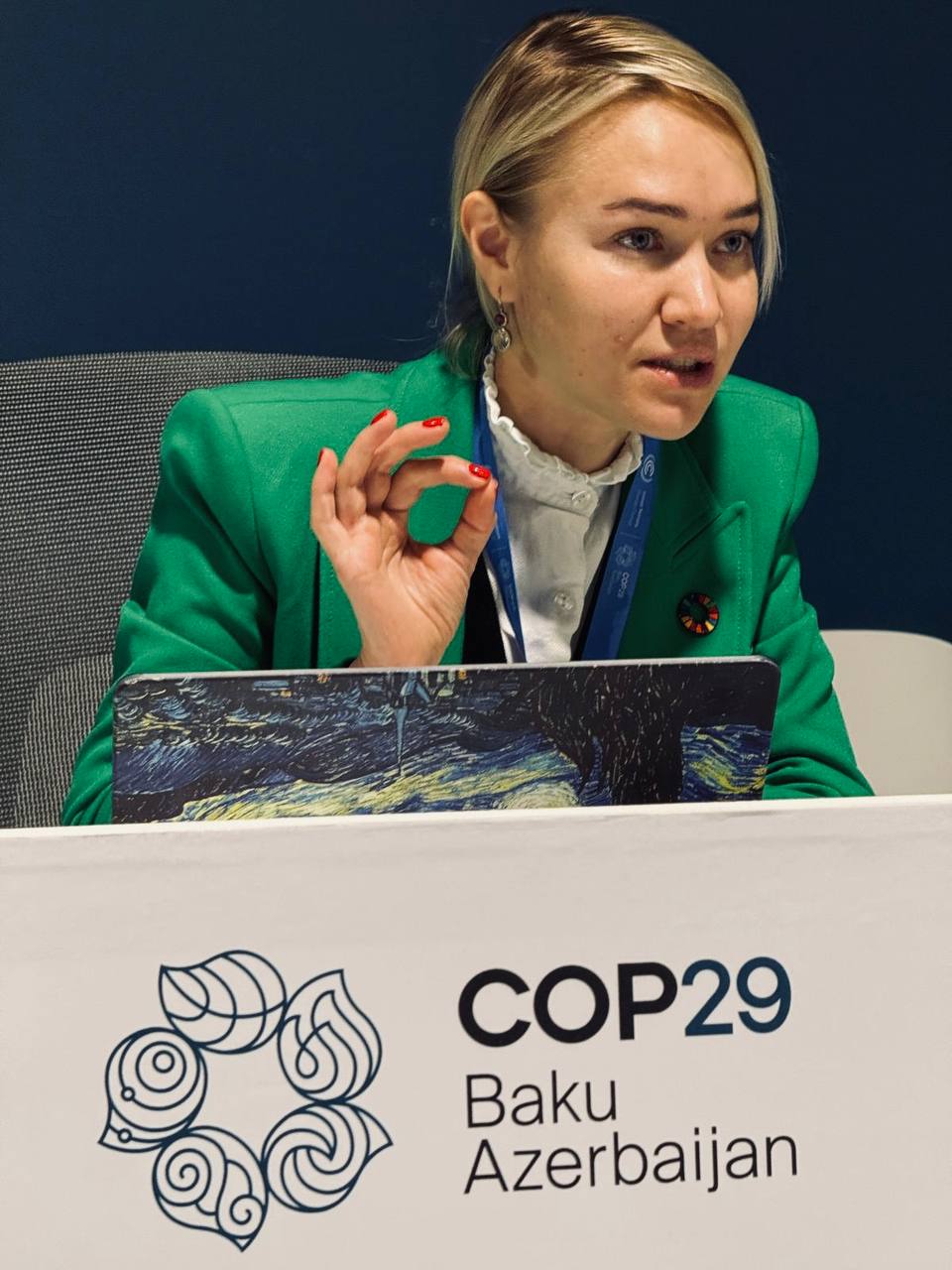
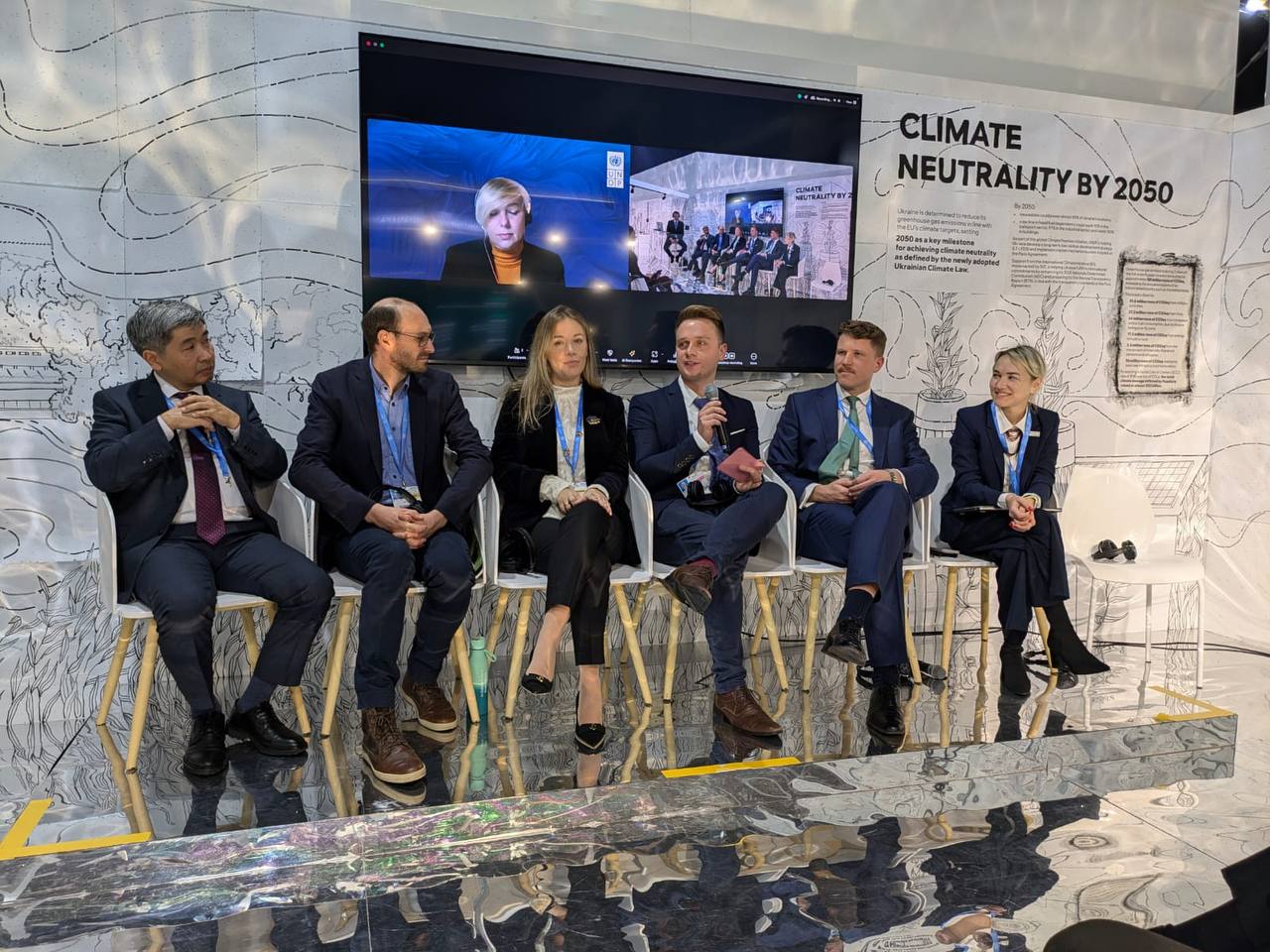
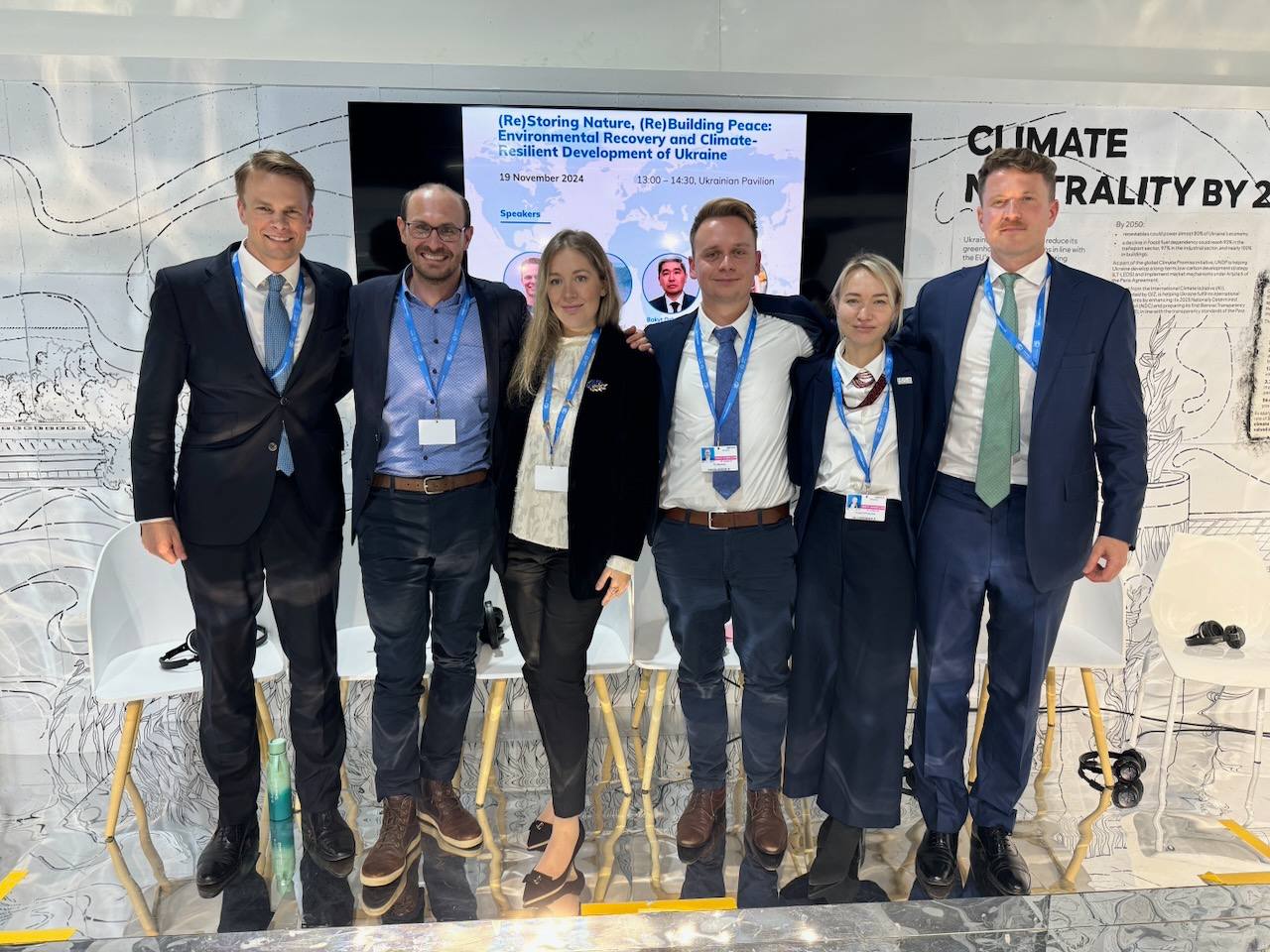
On November 19, at the Ukrainian Pavilion, the COP side event “(Re)Storing Nature, (Re)Building Peace” brought together experts to discuss the intersection of environmental recovery, climate-resilient development, and peace-building in Ukraine. Dr. Ievgeniia Kopytsia, an MSCA4Ukraine researcher specializing in climate law and environmental recovery, shared insights into how Ukraine is navigating post-conflict recovery through innovative legal frameworks.
Navigating Complex Challenges Through Legal Frameworks
Ukraine’s Unique Context
Ukraine’s post-conflict landscape serves as a model for examining the relationship between environmental law, climate action, and peace-building. Reconstruction here is not just about rebuilding physical infrastructure but reimagining
how legal systems can drive sustainable recovery.
Legal Innovation in Crisis
In 2023, Ukraine adopted its Framework Climate Law, committing to climate neutrality by 2050. This milestone, achieved during wartime, challenges conventional recovery timelines by demonstrating
that conflict does not preclude bold climate action. It sets a precedent for regions grappling with both post-conflict recovery and climate change mitigation.
Legal Architecture for Climate-Resilient Recovery
Ukraine’s emerging legal framework addresses critical dimensions, including:
- Climate Integration in Reconstruction: Mandating climate impact assessments while balancing the need for rapid recovery.
- Environmental Justice: Establishing mechanisms for holding entities accountable for environmental damage and ensuring climate-resilient reconstruction.
- Transboundary Cooperation: Promoting regional collaboration to manage shared ecosystems through harmonized legal frameworks.
Key Directions for Legal Innovation
The COP side event highlighted transformative approaches, such as:
- Developing nature-based solutions to protect carbon sinks like peatlands.
- Creating legal mechanisms that support both environmental protection and sustainable economic recovery.
- Introducing climate vulnerability metrics into environmental damage assessment frameworks.
These innovations aim to align Ukraine’s recovery with international climate goals, offering a blueprint for other regions facing similar challenges.
Implications for International Climate Law
Ukraine’s approach offers valuable lessons for global climate law:
- Integrating climate considerations into post-conflict recovery processes.
- Establishing adaptive frameworks that balance immediate needs with long-term sustainability.
- Designing mechanisms for cross-border environmental cooperation and climate finance in crisis settings.
Future Directions in Climate Law
The role of climate law in post-conflict recovery will continue to grow, with priorities including:
- Strengthening collaboration between legal scholars and practitioners.
- Developing innovative tools for climate finance in conflict-affected regions.
- Building adaptive frameworks capable of evolving with new environmental challenges.
A Transformative Legal Framework for Peace and Sustainability
Ukraine’s resilient legal framework combines ecological stability, climate justice, and societal equity. Key features include:
- Protection and restoration of vital carbon sinks.
- Prosecution of environmental warfare and ecocide.
- Integration of traditional ecological knowledge with modern science.
- Establishment of specialized environmental courts and stakeholder engagement processes.
Through instruments such as carbon pricing, mandatory climate risk assessments, and cross-border agreements, Ukraine’s legal framework sets a foundation for sustainable development and peace-building.