Ukraine’s reconstruction is often described as a “post-war” challenge. In reality, it is unfolding during active hostilities, under conditions that stretch environmental governance, climate policy, and the rule of law far beyond their original design limits.
Decisions taken today on infrastructure, energy systems, land use to emergency procedures, will lock in legal, environmental, and economic outcomes for decades to come.
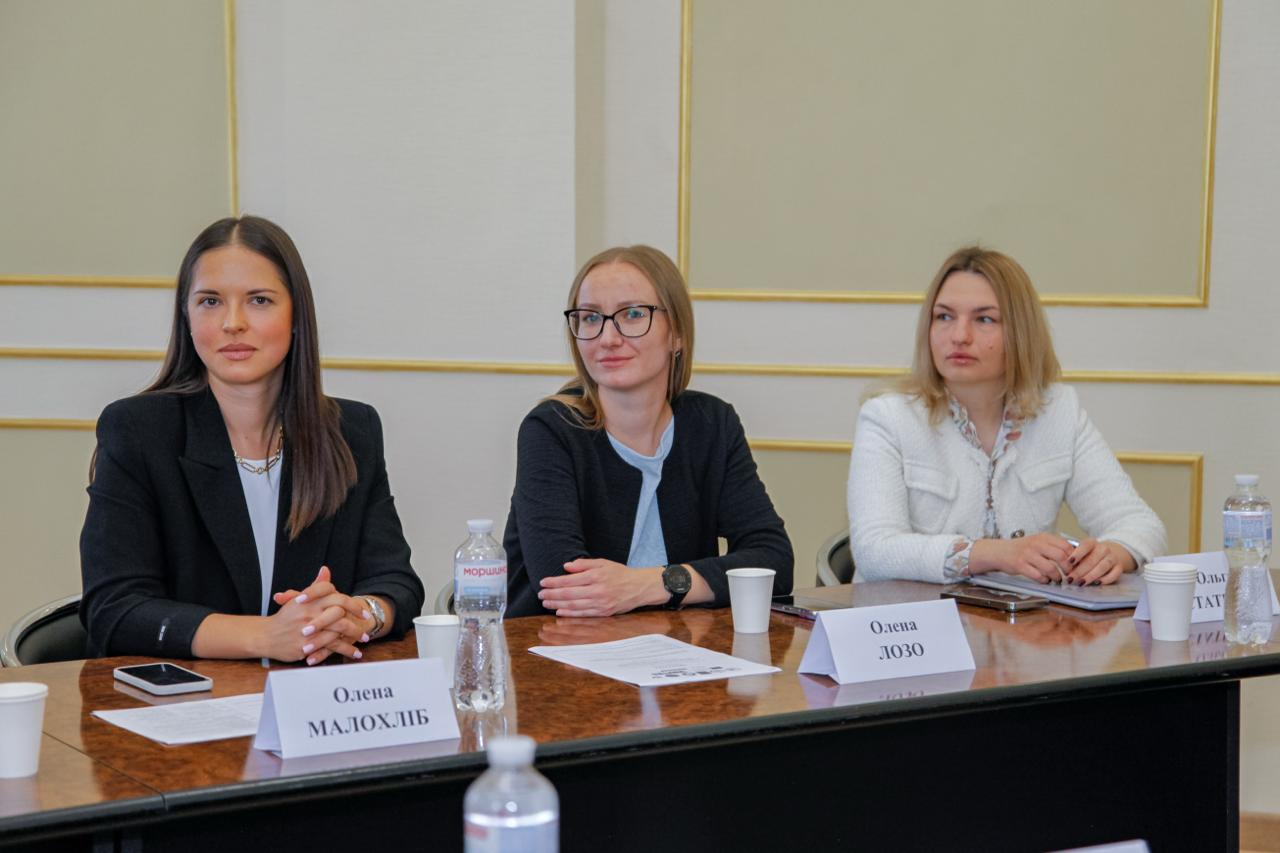
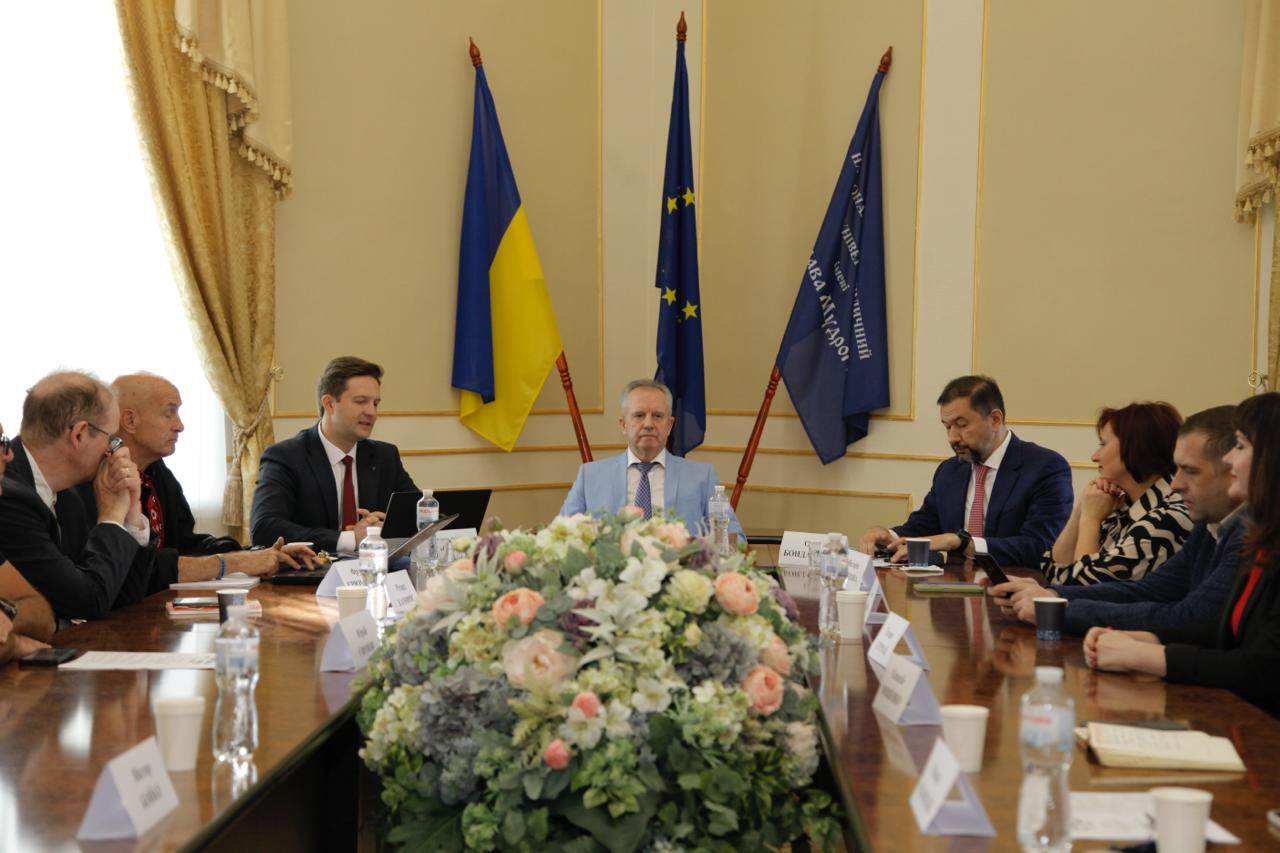
A new synthesis report prepared within the MSCA4Ukraine project led by Ievgeniia Kopytsia brings together insights from a high-level panel held at the IX Kharkiv International Legal Forum in September 2025. The discussion examined how environmental protection, climate governance, and the rule of law can and must be embedded into Ukraine’s recovery while the war is still ongoing
Environmental damage is a security issue
The scale of war-related environmental harm in Ukraine is unprecedented in modern Europe. Thousands of square kilometres of land have been burned, flooded, mined, or contaminated. Critical energy and water infrastructure has been destroyed. Greenhouse gas emissions from warfare, fires, and damaged ecosystems already rival those of major European economies.
These impacts are not abstract environmental concerns. They directly affect national security, public health, food systems, energy stability, and population displacement. As the panel emphasised, environmental security is inseparable from human security and state resilience. Treating environmental protection as a secondary or “later” concern risks entrenching vulnerabilities that undermine recovery itself.
Reconstruction as a rule-of-law stress test
Ukraine’s recovery is also a system-wide stress test for environmental governance under extreme conditions. Emergency derogations from environmental impact assessment (EIA), strategic environmental assessment (SEA), and public participation—introduced to accelerate reconstruction—are increasingly becoming normalised.
While speed is essential, the panel warned that prolonged reliance on exceptional regimes erodes environmental democracy, legal certainty, and trust in institutions, and risks misalignment with EU standards at a critical moment in Ukraine’s accession process. Weak procedural safeguards today can translate into litigation risks, stranded investments, and delayed EU integration tomorrow.
Maintaining EIA, SEA, access to information, and access to justice—even in adapted forms—is not a bureaucratic luxury. It is a core component of rule-of-law-based recovery.
EU alignment cannot be postponed
Reconstruction decisions are, in practice, de facto EU accession decisions. Ukraine faces the simultaneous challenge of rebuilding a war-damaged country while aligning with one of the world’s most complex bodies of environmental and climate law under Chapter 27 of the EU acquis.
The panel highlighted both progress—such as the adoption of a framework climate law—and the risks of “paper alignment” without implementation. Without strong institutions, secondary legislation, monitoring systems, and enforcement capacity, formal compliance will not translate into real-world results.
Embedding EU environmental and climate acquis into recovery planning from the outset is essential to avoid regulatory lock-in, protect access to EU funding, and provide long-term certainty for communities and investors alike.
Institutions matter more than ever
A recurring message was the centrality of horizontal environmental institutions. Effective recovery requires credible systems for environmental monitoring, inspection, enforcement, and liability. Without reliable data and procedurally robust evidence-gathering, even well-documented cases of war-related environmental damage may fail in court—nationally or internationally.
Courts, prosecutors, regulators, and inspectors are not peripheral actors in reconstruction. They are part of the infrastructure of resilience.
Climate damage caused by war: a legal blind spot
One of the most forward-looking elements of the discussion concerned climate damage caused by armed conflict. Existing international legal frameworks largely fail to capture greenhouse gas emissions and long-term climate harm resulting from warfare.
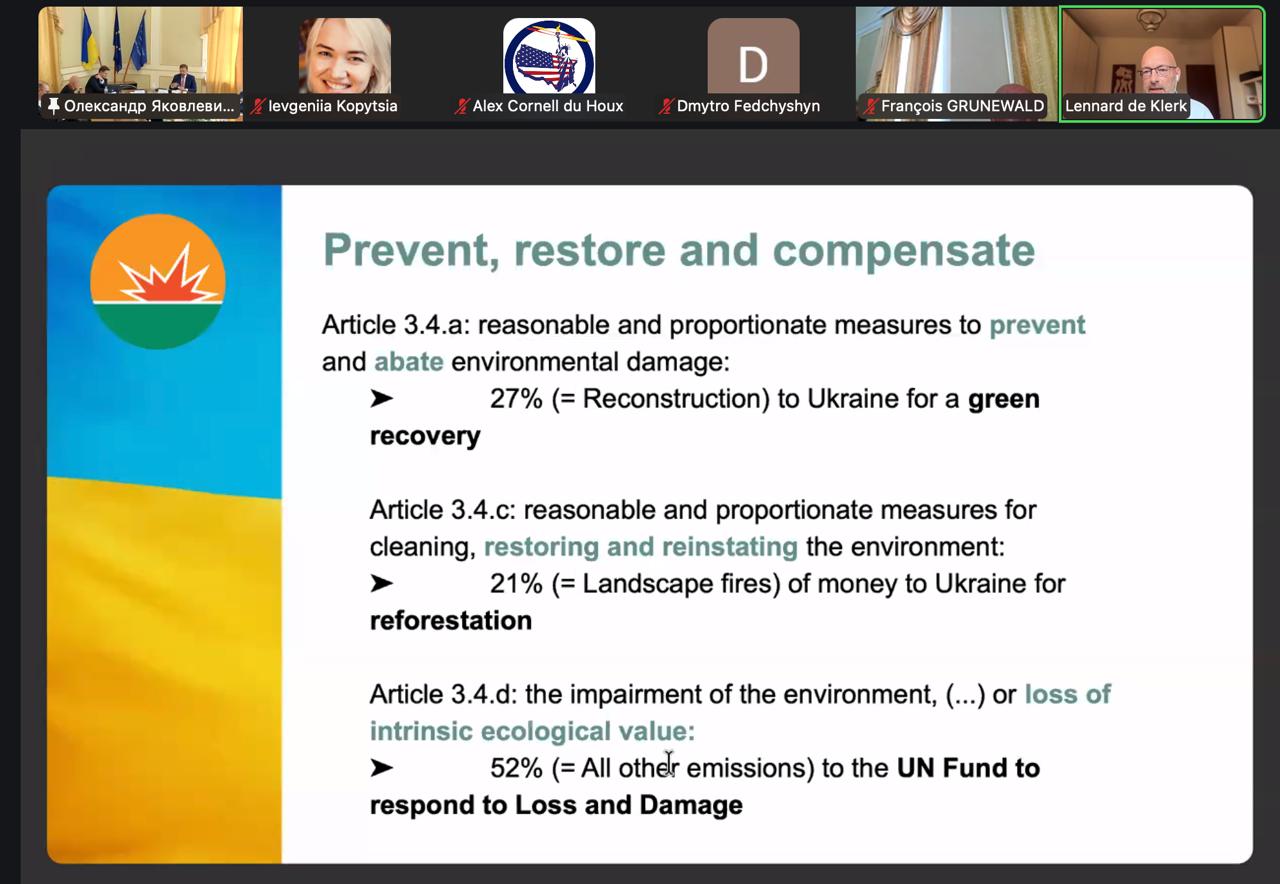
Ukraine has begun pioneering methodologies to account for war-related emissions and estimate climate damage using tools such as the social cost of carbon. Preliminary figures suggest climate damage in the tens of billions of euros. While legal pathways for compensation remain underdeveloped, Ukraine’s experience is already shaping emerging international debates on accountability, reparations, and ecocide.
Beyond Ukraine: global relevance
The panel’s conclusions resonate far beyond Ukraine. Climate change, armed conflict, and environmental degradation increasingly interact to create compound crises. Ukraine’s experience offers rare empirical insight into how environmental law, climate governance, and democratic accountability function under prolonged instability.
Rather than viewing environmental protection as a constraint on recovery, the synthesis report frames it as a foundation for long-term security, resilience, and European integration.
As Ukraine rebuilds under fire, the lesson is clear: green recovery and the rule of law are not luxuries for peacetime. They are conditions for survival.