By Dr. Ievgeniia Kopytsia
MSCA4Ukraine Fellow
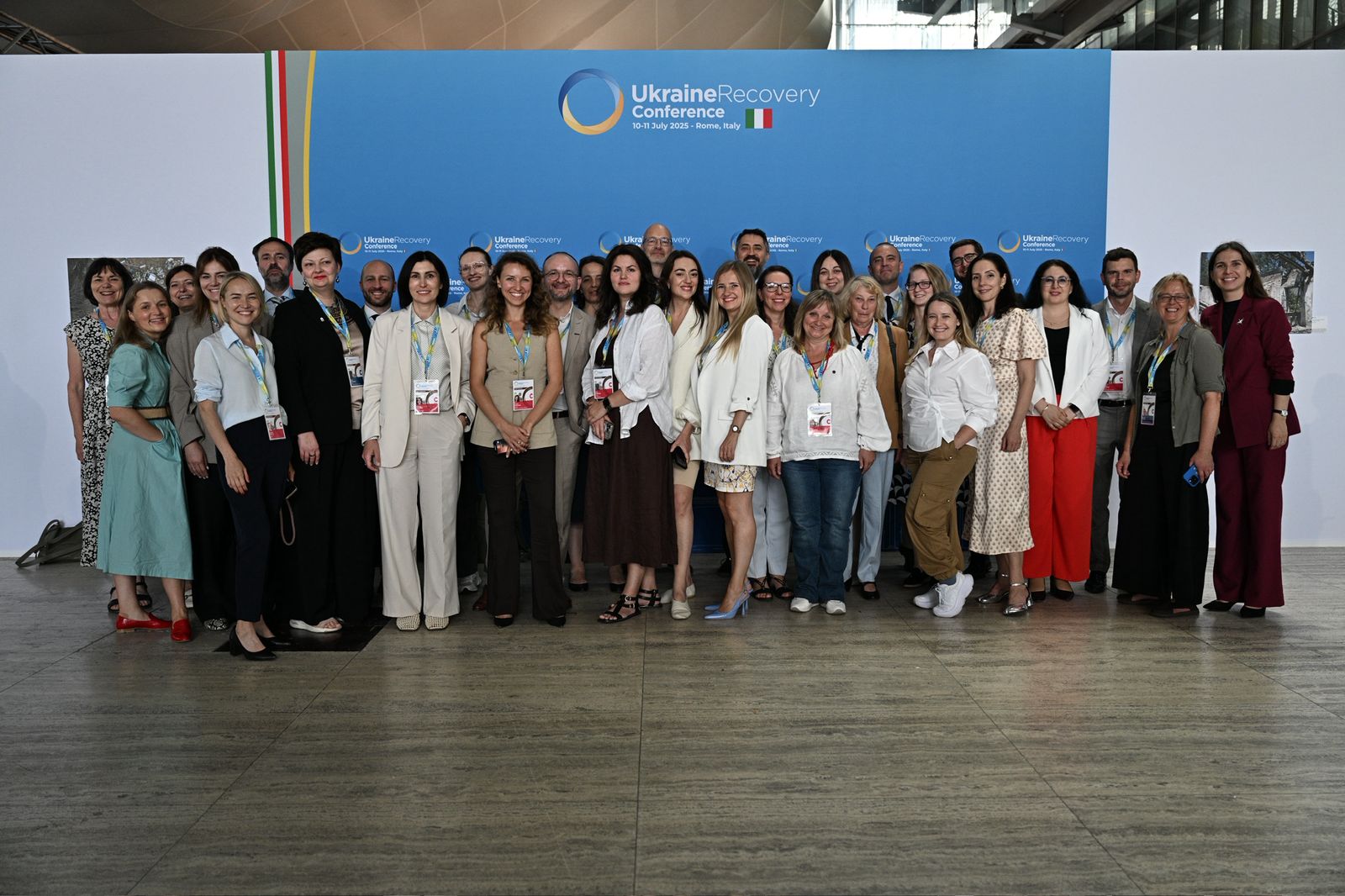
The Ukraine Recovery Conference (URC2025) held in Rome this July marked another step in the international community’s ongoing engagement with Ukraine’s post-war reconstruction. As someone working at the intersection of environmental law, climate governance, and just recovery, I came away with mixed impressions—hopeful about the growing recognition of sustainability, but deeply concerned about persistent gaps in practice and perspective.
A Necessary Space—With Room to Grow
Let’s start with what worked. The URC remains a vital event to keep Ukraine and its recovery at the top of the global agenda. In a time when media cycles are fast and attention spans short, this conference served as a crucial reminder of the stakes: a sovereign country still under siege, with a society seeking to rebuild not only infrastructure but identity.
Compared to previous years, URC2025 was more inclusive. More NGOs, Ukrainian municipalities, and civil society organisations were present in the room. Agreements between Ukrainian and Italian cities were signed. The conference was also attended by the highest number of heads of state and government to date, reflecting continued political support at the highest levels.
Yet for all the attendance and ambition, there were troubling signs that the URC risks becoming untethered from the reality on the ground.
Sustainability on the Margins—Again
The environmental agenda—so often sidelined in times of crisis—was once again fragmented and underrepresented.
- The absence of Ukraine’s Minister of Environment and her delegation was not just diplomatically unfortunate; it also led to the European Commissioner for Environment cancelling his participation, a domino effect that weakened the
green agenda’s visibility.
- The sole high-level panel on environmental recovery included no Ukrainian speakers—an alarming oversight that undermines local ownership.
- Sustainability was featured but not mainstreamed. It appeared in side events or as an occasional reference, rather than a foundational principle guiding each panel.
This runs counter to the repeated calls from Ukrainian and international experts after URC2024: that climate resilience, environmental justice, and circular economy principles must be embedded in all sectors of recovery planning—not treated as add-ons.
Civil Society in the Room—but Rarely on the Stage
While the number of civil society participants increased, their representation on panels remained extremely limited. High-level sessions were dominated by governments, international financial institutions, and private sector representatives. Time for Q&A was often restricted, making meaningful exchange difficult.
Furthermore, the lack of transparency—no full programme or speaker list released until the last minute—limited opportunities for CSOs and smaller municipalities to prepare and engage strategically.
This exclusion is not only unjust; it’s counterproductive. Ukraine’s most creative and community-based recovery efforts are being led by local actors—NGOs, grassroots networks, and municipalities. Their insight should not be secondary. It should be central.
Silence Where There Should Be Truth
Perhaps the most jarring element of the conference was its silence on the ongoing war. There was no official minute of silence, no clear moment to acknowledge the lives lost, the towns still under fire, the people living in daily fear.
The likely reason? Organisers may have been wary of making attendees “uncomfortable,” particularly in host countries with divided public opinion on support for Ukraine. But discomfort should not be avoided—it should be channelled into solidarity, urgency, and commitment.
We cannot speak about “recovery” as if peace has already been achieved. It hasn’t. And to plan as if the war were over is to risk designing policies detached from reality.
What Was Announced—and What Wasn’t
Among the notable developments at URC2025:
- A new multi-country recovery fund was launched by Germany, France, Poland, Italy, and the EIB, focusing on energy, transport, critical raw materials, and dual-use sectors.
- The EBRD announced support for 1 GW of new renewable energy capacity in Ukraine.
- The EIB unveiled a guarantee fund mechanism for renewable energy—but no deals were finalised during the event.
Encouraging, yes—but still light on detail. More importantly, they do not yet amount to a clear, coordinated green recovery framework. The announcements must be followed by transparent mechanisms and accessible finance for local authorities and civil society—not just large-scale infrastructure players.
Recommendations Going Forward
To build a recovery that is not only green but just and resilient, future URCs should:
- Mainstream sustainability across all panels, with specific attention to climate law, environmental accountability, and circular economy reform.
- Ensure balanced speaker representation, including Ukrainian civil society, local governments, and environmental experts.
- Treat ongoing war realities not as distractions but as defining contexts.
- Include discussions on media, disinformation, and wartime communications—key to Ukraine’s security and sovereignty.
- Coordinate better around side events and release full conference materials in advance to enable proper planning.
Final Reflection
Ukraine is not only rebuilding what was destroyed—it is building what the world needs: a blueprint for green, just, and democratic recovery in the face of aggression and crisis.
We must ensure that our policies match our promises. That the rhetoric of sustainability becomes the reality of implementation. And that Ukraine’s recovery is shaped by those who are living it—not just those funding it.