by Dr. Ievgeniia Kopytsia
MCSA4Ukraine Fellow, University of Genoa
Assoc. Prof., Yaroslav Mudryi National Law University
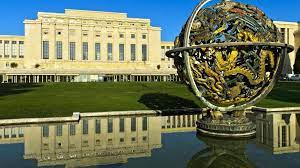
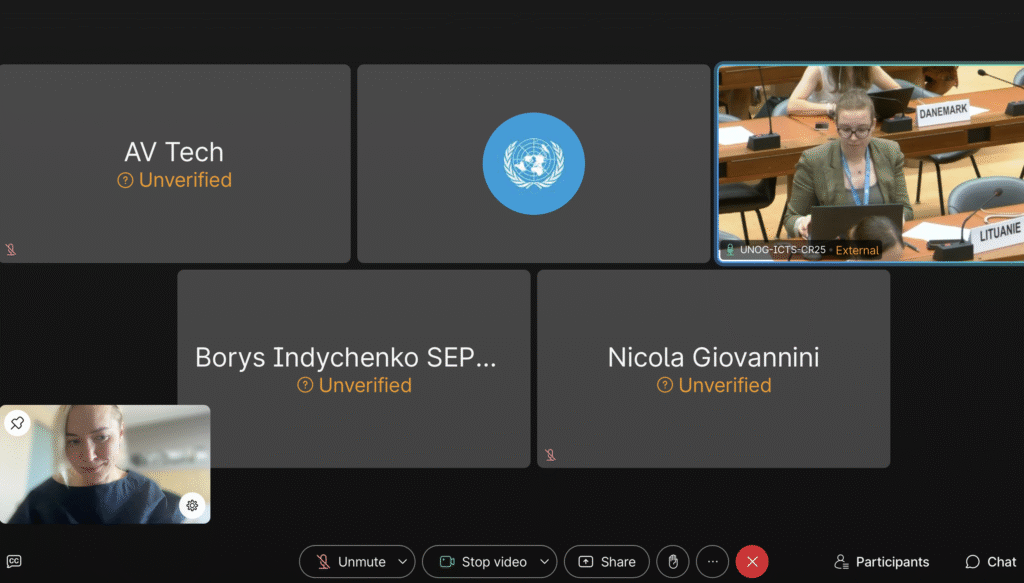
On June 20, 2025, the United Nations Palais des Nations in Geneva hosted a pivotal side event during the 59th Session of the Human Rights Council: “Accountability for Wartime Environmental Crimes: Legal Pathways, Community Voices, and International Responsibility.” This gathering brought together government officials, legal experts, civil society, and international organizations to confront the environmental devastation wrought by Russia’s invasion of Ukraine.
The context is stark. The Russian military’s campaign has unleashed deliberate, large-scale destruction of Ukraine’s environment. The consequences extend far beyond scorched forests and polluted rivers—they are harming public health, threatening food security, and undermining the country’s long-term recovery. Nearly one-quarter of Ukraine’s territory is now contaminated with landmines and unexploded ordnance. One of the gravest ecological catastrophes—the destruction of the Kakhovka Hydroelectric Dam in June 2023—flooded more than 620 km² of land, including protected wetlands and farmland, and unleashed a toxic cocktail of industrial pollutants into the Dnipro River. The estimated environmental damage is $6.2 billion.Ukrainian officials rightly called it “an environmental bomb of mass destruction.”
But behind these numbers are real people—families who have lost their homes, children growing up in poverty and fear, and communities struggling to rebuild amidst uncertainty. As someone from Kharkiv, I have seen both the trauma and the resilience of Ukrainians. From the earliest days of the full-scale invasion, Ukraine’s civil society has mobilized to document environmental crimes. NGOs such as Ecoaction and Truth Hounds have catalogued hundreds of incidents of suspected ecological harm. However, the sheer scale of destruction demands more: systematic, high-quality documentation that can withstand international legal scrutiny and support future prosecutions.
Legal Framework: Where We Stand
International humanitarian law (IHL) prohibits methods of warfare expected to cause “widespread, long-term and severe damage to the natural environment.” Article 56 of Additional Protocol I specifically protects dams, dykes, and nuclear power plants from attack. The Rome Statute of the International Criminal Court (ICC) recognizes environmental destruction as a war crime, but only if it meets the high threshold of being “widespread, long-term, and severe”.
The Push for Ecocide
Ukraine is at the forefront of efforts to criminalize ecocide—the deliberate, large-scale destruction of ecosystems. In 2021, an independent expert panel proposed a legal definition of ecocide and in 2024, members of the European Parliament and lawmakers from several countries signed an appeal to the ICC Prosecutor to recognize ecocide as a crime under international law. Additionally, the European Parliament voted to include ecocide in EU law, accelerating the development of legal mechanisms for accountability. Forty-two countries now officially support initiatives to criminalize ecocide, signaling a shift in international legal norms.
Ukraine is one of the few countries that has ecocide enshrined in national law under Article 441 of the Criminal Code. As of mid-2025, Ukrainian prosecutors are investigating over 270 cases of wartime environmental crimes, including 15 potential ecocide cases, such as the Kakhovka Dam destruction.Notably,The ICC has joined investigations into the Kakhovka Dam case, which could become a landmark prosecution for environmental war crimes.
The Road Ahead: Challenges and Hopes
While recent advancements mark significant progress, formidable challenges persist in the pursuit of accountability for wartime environmental crimes. One of the most pressing issues is the limitation of international legal mechanisms: major global powers such as Russia, the United States, and China have not ratified the Rome Statute, which restricts the jurisdiction of the International Criminal Court over environmental crimes committed during armed conflict. This gap in global legal consensus hampers the ability to hold perpetrators accountable on an international scale.
Another critical barrier lies in the evidentiary requirements for prosecuting environmental war crimes. The legal standard demands proof that the harm is “widespread, long-term, and severe,” and that it was caused with intent. Gathering and substantiating such evidence is a complex and resource-intensive process, often complicated by the ongoing nature of conflict and the destruction of monitoring infrastructure.
At the local level, communities most affected by environmental devastation frequently lack the necessary resources, data, and technical expertise to conduct effective environmental monitoring or to implement green reconstruction. These constraints slow the pace of recovery and limit the ability to document harm in a manner that meets international legal standards.
Despite these obstacles, there are grounds for optimism. Ukrainian civil society organizations, local authorities, and international partners are actively engaged in innovative recovery efforts. The Environmental Compact for Ukraine, along with pilot projects focused on nature-based solutions in liberated territories, exemplifies a commitment to sustainable and inclusive reconstruction. These initiatives demonstrate that, even in the face of adversity, recovery can be both just and ecologically sound.
A Call to Action
The discussions in Geneva underscored that the pursuit of environmental justice in Ukraine is not merely a legal or policy challenge—it is a collective responsibility. Achieving meaningful progress requires:
- Coordinated advocacy at the international level to strengthen legal frameworks and ensure accountability.
- Comprehensive legal reforms, both nationally and globally, to close existing gaps and lower barriers to prosecution.
- Increased investment in local resilience, environmental monitoring, and sustainable recovery.
- Genuine inclusion of affected communities in decision-making processes, ensuring that their experiences and needs shape the path forward.
The event was more than a policy discussion—it was a call for solidarity. We need coordinated advocacy, deeper legal reform, and robust resource mobilization. Most importantly, we must center the voices of those living through this crisis. Only then can we ensure that accountability for wartime environmental crimes becomes a reality, and that Ukraine’s recovery sets a new standard for justice and sustainability worldwide.
No responses yet